
Advances in technology and subsequent emergence of complex derivative products are often blamed for instabilities in the financial markets. But is it the case? Could the 2008 crash and many others be avoided had there been no derivative products? had A dive into the late seventeenth century shows us how the creation of the stock market coincided with (led to?) the first stock market bubble.
The Glorious Revolution began in 1688 when William of Orange took the English throne from his father in law James II. The new King accepted the numerous political constraints put in place by the parliament that the previous monarch absolutely disregarded. Thus the parliament, with support from the monarch, introduced bold reforms that became the cornerstones of the financial revolution.
In early 1690s, the very first government bonds were issued, and the Bank of England was established. A booming economy ignited dormant public interest in the financial markets. Numerous joint-stock companies were established, and several projects were financed with public money. This led to the emergence of the nascent stock market.
The venture founded by New England Sea Captain William Phips was crucial in the emergence of the stock market. In 1680s, he made it his life’s mission to retrieve treasure from a Spanish Galleon that sunk off near the island of Hispaniola. Supported by a small group of people, Phips formed a partnership firm.
Phips succeeded in 1688. The wealth he recovered made his partners enormously wealthy. As one would expect, several Joint-Stock diving companies were formed to replicate what Phips did. Public interest in these companies was established by demonstrating new diving technology in the Thames. Shares were gifted to notable people to increase confidence in the ventures. A return of 100% was promised to shareholder. Share prices of these companies increased several folds within a year.
Destined for downfall, these shares came plummeting down to less than 10% of their hyped price when the expeditions failed to recover anything of substantial value. Achieving what Phips had achieved had a one in a million chance. Phips may have won but the other 999,999 failed.
At the same time in 1689, war had broken out with France. The government imposed economic sanctions on France. Entrepreneurs leveraged this opportunity to file patents and set up companies that manufactured goods that were imported from France. Although these events took place in the scientific age of Sir Isaac Newton, most of the patents were mere scams. They were used as convenient devices for quickly launching companies in the stock markets. With time, the stock market was becoming increasingly sophisticated. Options and futures (derivates) had started trading, and the concept of hedging – minimizing the downside risk by buying or selling an opposite position – was well understood by investors.

The government leveraged the public interest in gambling and launched in 1694 the British Government lottery. The tickets, £10 each, gave the winners £1000 for the next 16 years while the losers received £1 a year for the same period. This was followed by the introduction of several private lotteries. Lotteries became so ubiquitous that they started circulating as currency. The financial markets also cashed in on the frenzy. Lottery style bonds were introduced to raise money. The winning bonds received a prize (a higher payment than the losing bonds, every year until the maturity of the bonds).
Ladies’ headdresses started growing in length with the bubble. They peaked out in 1695 at seven feet when the market crashed.Sir Richard Steele remarked that stocks rose and fell in line with Head Dresses. This was observed again with women’s skirt hemlines, which rose from just above the ground in 1920 to just above the knee in 1929 – the year of the beginning of the great depression (Hemline theory of stock prices). The rationale is that a growing economy spurs a spirit of self-interest and promotes extravagant displays of fashion.
Gifting stock to notable figures to silence their caveats or to attract other investors shows us that manipulation of the financial markets and bribery persisted in the first stock market. After the East India Company’s charters were forfeited in1693 as a result of a failure to pay taxes, a rival company emerged. To stay in business the East India Company bribed politicians by offering them stock options that would generate instant profit as a result of the increase in stock price after the company got a new charter.
The Bank of England, established in 1694, gained a banking monopoly in England by lending £1.2 million to the government. The money, which was the Bank of England’s own bank notes, had no intrinsic value. However, it received great support and as a result, Bank of England’s share price rose to a hefty premium.
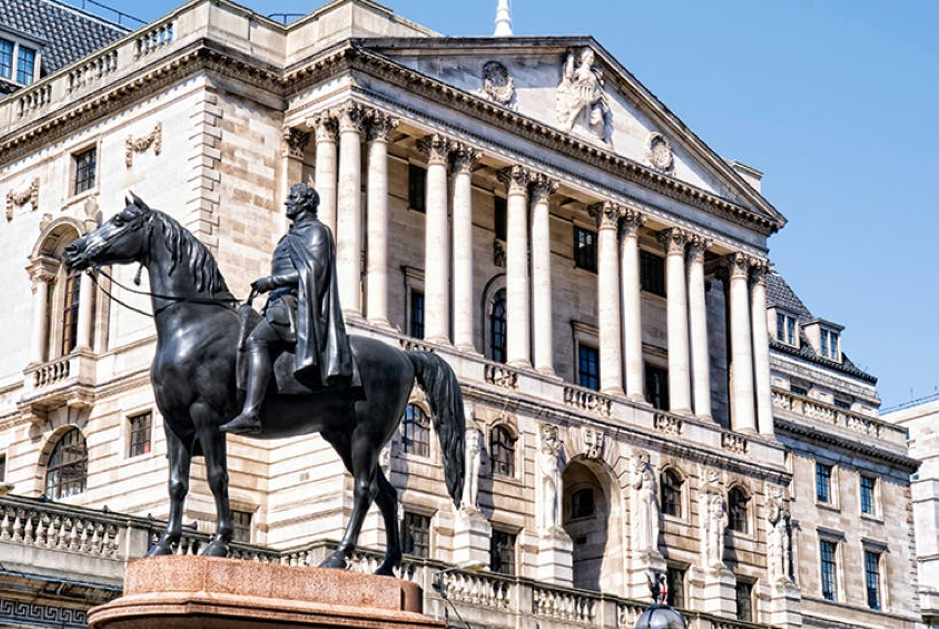
In 1965, a financial crisis began in England because of widespread financial distress (Companies not being able to meet their financial obligations). Confidence in the financial markets came plummeting down. Government bonds fell to 40% discount and prices of stocks fell by as much as 90%. Most of the new companies completely disappeared.
A financial bubble begins with the excitement of speculative interest. Usually because of unreal profits from a certain investment. It is followed by mass positive reinforcement by inexperienced investors entering the market when prices have risen. Investor rationality weakens, and credit gets overextended (taking more loans than what the borrower can repay). And finally leads to financial distress. Bubbles are only natural in a world with stock markets, given that the stock market itself was conceived from a bubble.

 Plain Vanilla Finance
I like how there’s a great balance between intellectual rigor and concern for the less versed reader (in the form of quick explanations to certain concepts). It was a nice educational read for me, and I enjoyed diving into the history of it all and coming out a tad bit more savvy about Finance
LikeLiked by 1 person
Thank you for the wonderful words Nelberto!
LikeLike