

Tulips, originally cultivated in Turkey, were introduced in theNetherlands in the mid 16th century. The spring-blooming bulb derives its name from the Turkish word ‘tulipan’, which means turban. This seemingly harmless flower gave rise to the first financial crisis in history.
Its rarity and the difficulty of cultivating certain variegations made it prestigious to own it. Tulip soon became a symbol of wealth and prosperity, and possessing it was considered a sign of fine taste. In a country where wealth and trade were growing rapidly, everyone wanted to partake in this frenzy. Without a doubt, these circumstances pushed up the price of the flower. So much so, that tulips with purple streaked petals (The Semper Augustus) sold for more than the price of a small townhouse in Amsterdam.
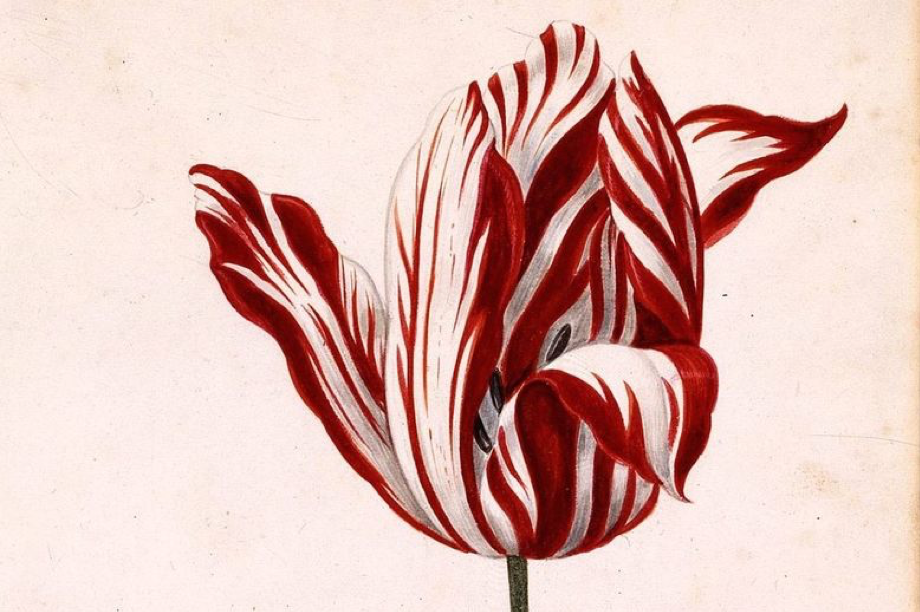
Figure 1: Semper Augustus
Tulips were becoming the talk of the town. Based on the colors and variegations of petals, Bulbs were assigned militaristic names.There was the Viceroy, followed by the Admiral and finally the General. Each of these selling for exorbitant prices. At the top of them all, however, was the Semper Augustus.
Incessantly rising prices led to the development of the first derivative market. Any ordinary bulb could blossom into a Semper Augustus. It was unknown at the time that this was caused by a disease in the flower. People started putting wagers on bulbs that were yet to blossom and hoped that it would bloom into a Semper Augustus.
During fall, when there were no tulips to sell, buying and selling of rights to ownership of tulips that will grow on a particular piece of land next spring started taking place. Prices for these contracts started exceeding annual wages of daily workers. Nobody wanted the flowers anymore. People only wanted to get rich overnight. Then in 1634, as one would expect, rumors of rising prices attracted outsiders from major European cities.Private negotiations of the contracts started taking place in inns. These were the first informal stock markets. People would casually come there, sell or buy contracts, have food and drinks and finally leave with more money than what they had entered with.
What is important to note is that it were the rights (to flowers that would grow in spring) and not the flowers that were traded. Here are some figures from the peak of the bubble to help envisage its size:
Table 1: Prices during the peak of the bubble
| Average annual wage | 200-400 Gilders |
| Small townhouse in Amsterdam | 300 Gilders |
| Tulips | Over 1000 gilders |
| Semper Augustus | Over 6000 gilders at the peak |
Then on 3 February 1637, the bubble burst.
Why, you ask? Because spring was here, and deliveries were due. Because the game was over. Nobody wanted the flowers anymore, there were no buyers. People only wanted to play to get rich. The last buyers of the contracts were devastated. These were the people who sold houses to buy tulip contracts and rumor is that many of them died insolvent.
Finally, the government intervened and the contracts were cancelled at 3.5% of the original price to prevent widespread ruin. With time, the prices of Semper Augustus returned to pre-mania levels, but other varieties never recovered.

 Plain Vanilla Finance